Broken Tooth, No Pain? What It Could Mean for Your Tooth
 Beyond 32 Dental Team
6 min read

On this page
A broken tooth that does not hurt can be easy to dismiss. There is no sharp sting, no throbbing, nothing obvious pushing you to act quickly. But the absence of pain is not a sign that everything is fine. It often means the damage has not yet reached the nerve, which can change over time.
Whether it is a small chip from biting something hard, a crack that appeared without warning, or a piece of molar that broke away during a meal, a broken tooth is worth prompt dental assessment even when there are no immediate symptoms. What happens in the weeks following a break can determine whether the tooth is saved or lost.
Quick Overview
- A broken tooth with no pain occurs when the damage stays within the outer layers of the tooth, leaving the nerve intact
- It may affect adults of any age and is often linked to existing decay, old restorations, or biting on hard foods
- Left unattended, even a break with no symptoms can worsen, allow bacteria in, and lead to infection or more significant damage
- How quickly symptoms develop and what treatment is needed depends on the type, size, and location of the break
- A dental assessment with X-rays is the only reliable way to know the full extent of the damage
Keep reading to understand why a broken tooth may not hurt at first, what the different types of breaks mean, and what treatment may involve.
Why a Broken Tooth May Not Hurt
Tooth pain typically comes from nerve involvement. When a crack or break stays within the enamel or dentine, the outer layers of the tooth, the inner pulp and its nerves remain protected. This is why it is entirely possible to chip or fracture a tooth and feel nothing immediately.
Some superficial cracks, known as craze lines, affect only the surface enamel and rarely cause discomfort. A fractured cusp, where a piece of the biting surface breaks away, can also produce no discomfort if it does not extend toward the nerve. In these cases, the tooth may feel slightly rough or jagged, but there is no sensitivity or ache.
The absence of pain does not mean the tooth is undamaged. It means the nerve has not been disturbed yet. This can change as bacteria enter the crack, as the fracture deepens under biting pressure, or as temperature changes begin to reach the dentine.
Types of Broken Teeth and What They Mean
Not all breaks carry the same level of urgency, but all warrant professional assessment. According to guidance on cracked teeth from the Australian Dental Association, some cracks do not require treatment while others are more serious and need prompt attention. The distinction depends on how deep the crack travels and whether it affects the nerve.
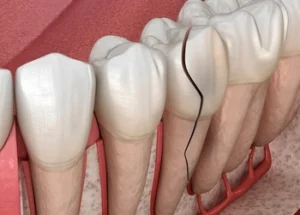 Common types include:
- Craze lines: Superficial cracks in the enamel surface only. Usually cause no symptoms and rarely need treatment, though a dentist may monitor them.
- Chipped or fractured cusp: A piece of the biting surface breaks away. Often causes no discomfort but can leave sharp edges that cut the tongue or cheek.
- Cracked tooth: A crack that extends from the biting surface downward. May cause no symptoms initially but can worsen over time, particularly with biting pressure.
- Split tooth: A crack that has progressed to divide the tooth into two distinct segments. This is more advanced and typically requires more involved treatment.
- Vertical root fracture: A crack that begins below the gum line. Often symptom-free for a long period, which makes it harder to detect without X-rays.
Why a Broken Tooth With No Pain Still Needs Attention
The most significant risk of leaving a broken tooth untreated is infection. Once the outer structure of a tooth is compromised, bacteria have a pathway to the inner pulp. An infected tooth pulp does not always announce itself with immediate pain; it can develop gradually, and by the time discomfort appears, the infection may be well established.
A broken tooth can also weaken neighbouring teeth and the surrounding gum tissue. Sharp edges from a chip or crack can irritate the soft tissue inside the cheek or along the gum line. If the break is left unaddressed, the crack may extend further under the pressure of daily chewing, limiting the options available for repair.
Early treatment almost always means simpler treatment. A small chip managed quickly may need only bonding. The same chip left for months may need a dental crown procedure to restore what remains.
What to Do Immediately After Breaking a Tooth
Before you see a dentist, a few simple steps can help protect the tooth and reduce the risk of further damage:
- Rinse gently with warm water to clear any debris from the area
- If there is bleeding, apply light pressure with a clean piece of gauze
- If the broken piece is intact, store it in milk or your own saliva and bring it to the appointment
- Cover any sharp edges with dental wax or sugar-free gum to protect the tongue and cheek
- Avoid chewing on the affected side
- Avoid very hot or very cold foods and drinks if the area is sensitive
These steps manage the immediate situation but are not a substitute for professional care.
How Is a Broken Tooth Treated?
Treatment depends on the type of break, how deep it extends, and whether the nerve is involved. Early repair can improve the long-term survival of a damaged tooth.
Common treatment options include:
- Dental bonding: A tooth-coloured composite resin is applied and shaped to restore a chip or small crack. This is typically used for minor surface damage and is completed in a single appointment.
- Dental crown: When a larger portion of the tooth is missing, or the remaining structure is at risk of further cracking, a crown provides full coverage and protection.
- Root canal therapy: If the pulp has become infected or is at risk due to the depth of the break, root canal treatment removes the affected tissue and seals the tooth before a crown is placed.
- Extraction: In cases where the break is too severe to restore, such as a vertical root fracture that has progressed significantly, removal may be the only option.
Individual outcomes vary. The best treatment for any given tooth depends on a thorough clinical assessment and X-rays, not on the level of pain.
When to See a Dentist
 If you have broken a tooth, the right time to see a dentist is as soon as possible, regardless of whether it hurts. A break that causes no discomfort is not a reason to delay.
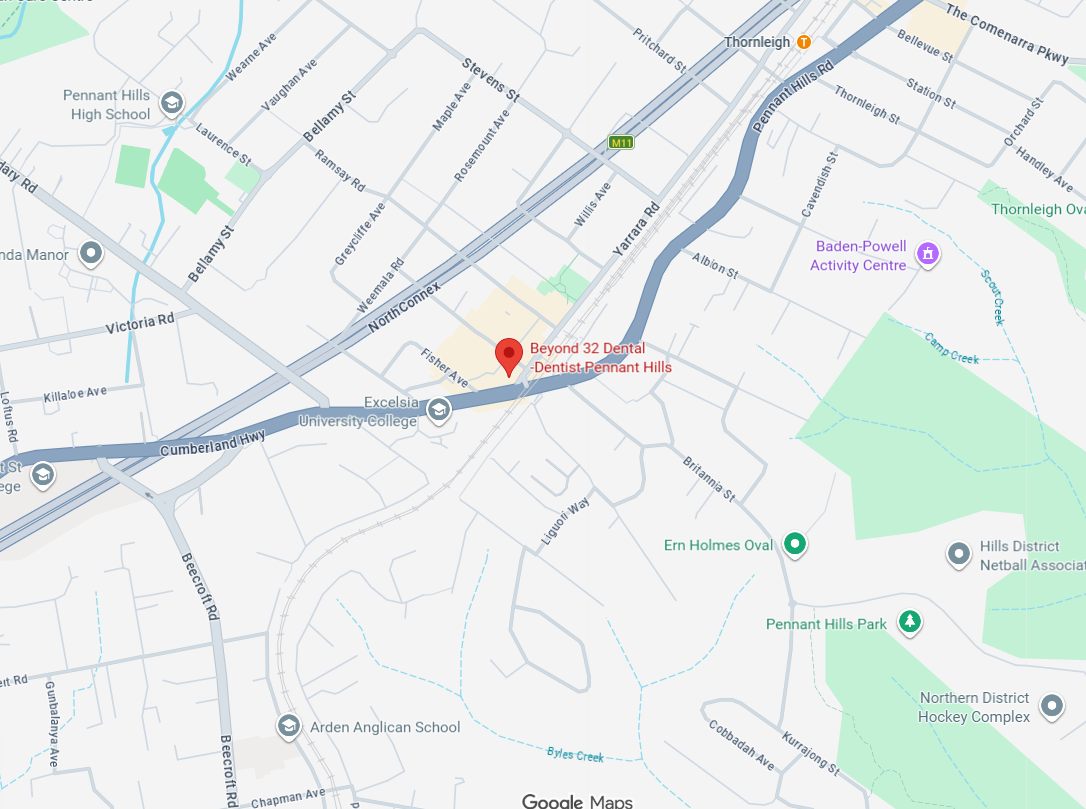
At Beyond 32 Dental in Pennant Hills, Dr Jeff Lin and Dr Jennifer Chung take a gentle, thorough approach to assessing damaged teeth, using X-rays to understand the full extent of the break before discussing what treatment may be appropriate.
Call Beyond 32 Dental on (02) 9139 8171 or book a consultation online.
Note: Any surgical or invasive procedure carries risks. Before proceeding, you should seek a second opinion from an appropriately qualified health practitioner.
Frequently Asked Questions
How long can a broken tooth go without treatment if there is no pain?
There is no safe window for leaving a broken tooth unattended, even without pain. The longer a break is left, the greater the chance that bacteria will enter the tooth, the crack will deepen, or infection will develop. What begins as a simple chip can become a more complex problem within weeks, particularly if the tooth is under regular biting pressure. Arranging an assessment promptly gives the best chance of a straightforward repair.
Can a broken tooth heal on its own?
Tooth enamel and dentine cannot regenerate once damaged. Unlike bone, a broken tooth will not repair itself over time. The damage may not worsen immediately if the break is minor and there is no infection, but it will not improve without dental treatment. The surrounding structure can be protected and the tooth restored, but this requires professional care.
References
Australian Dental Association. (n.d.). ‘Cracked teeth’. teeth.org.au. Sydney, NSW: Australian Dental Association. https://teeth.org.au/cracked-teeth
Healthdirect Australia. (n.d.). ‘Dental crown procedure’. Healthdirect Australia. Sydney, NSW: Healthdirect Australia. https://www.healthdirect.gov.au/dental-crown-procedure
Better Health Channel. (n.d.). ‘Dental injuries: knocked out, chipped or cracked teeth’. Better Health Channel. Melbourne, VIC: Victorian Government Department of Health. https://www.betterhealth.vic.gov.au/health/conditionsandtreatments/dental-injuries-tooth-loss
Beyond 32 Dental TeamPennant Hills, since 2013


 5.0 360+
Happy Customers